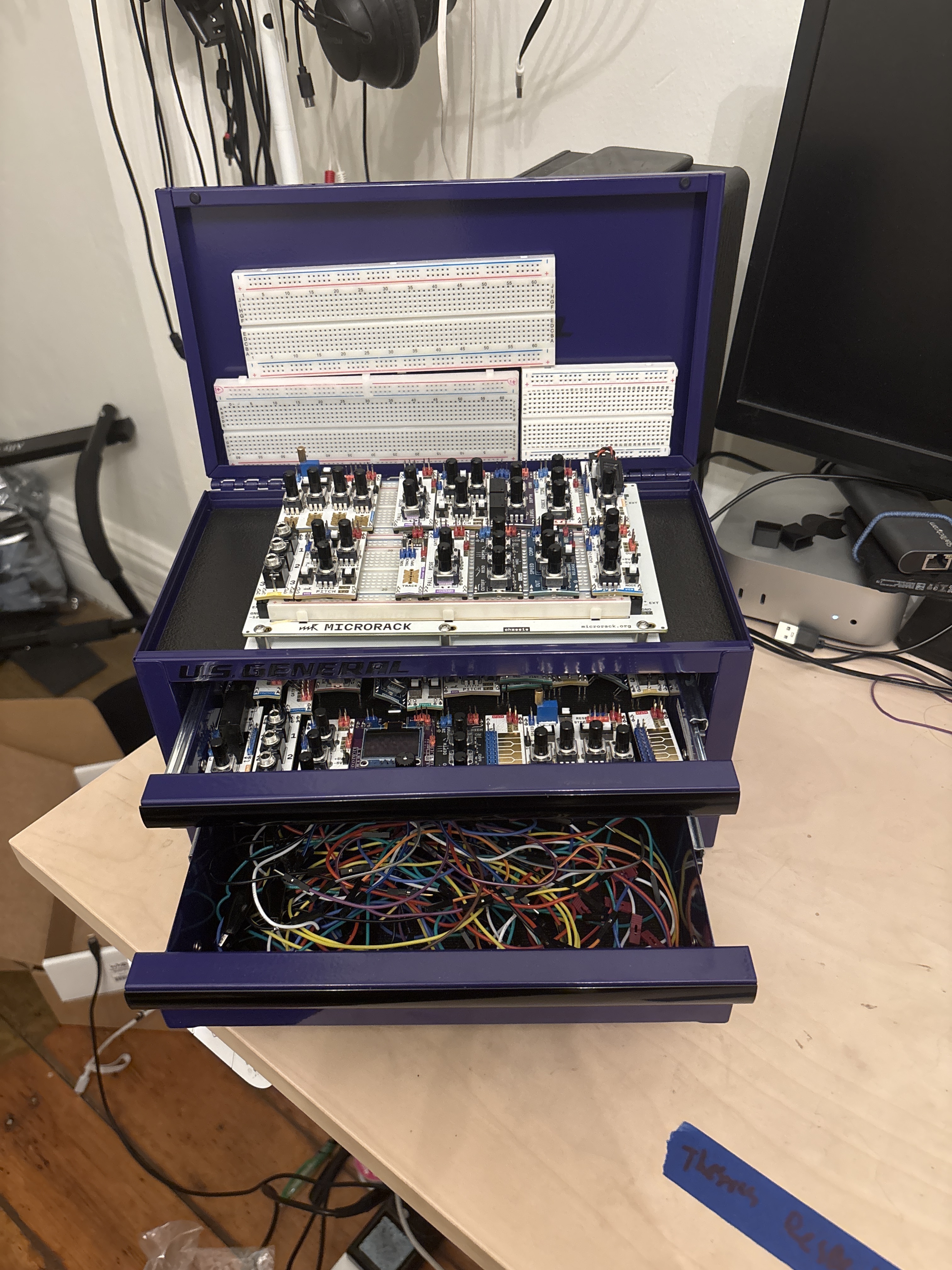
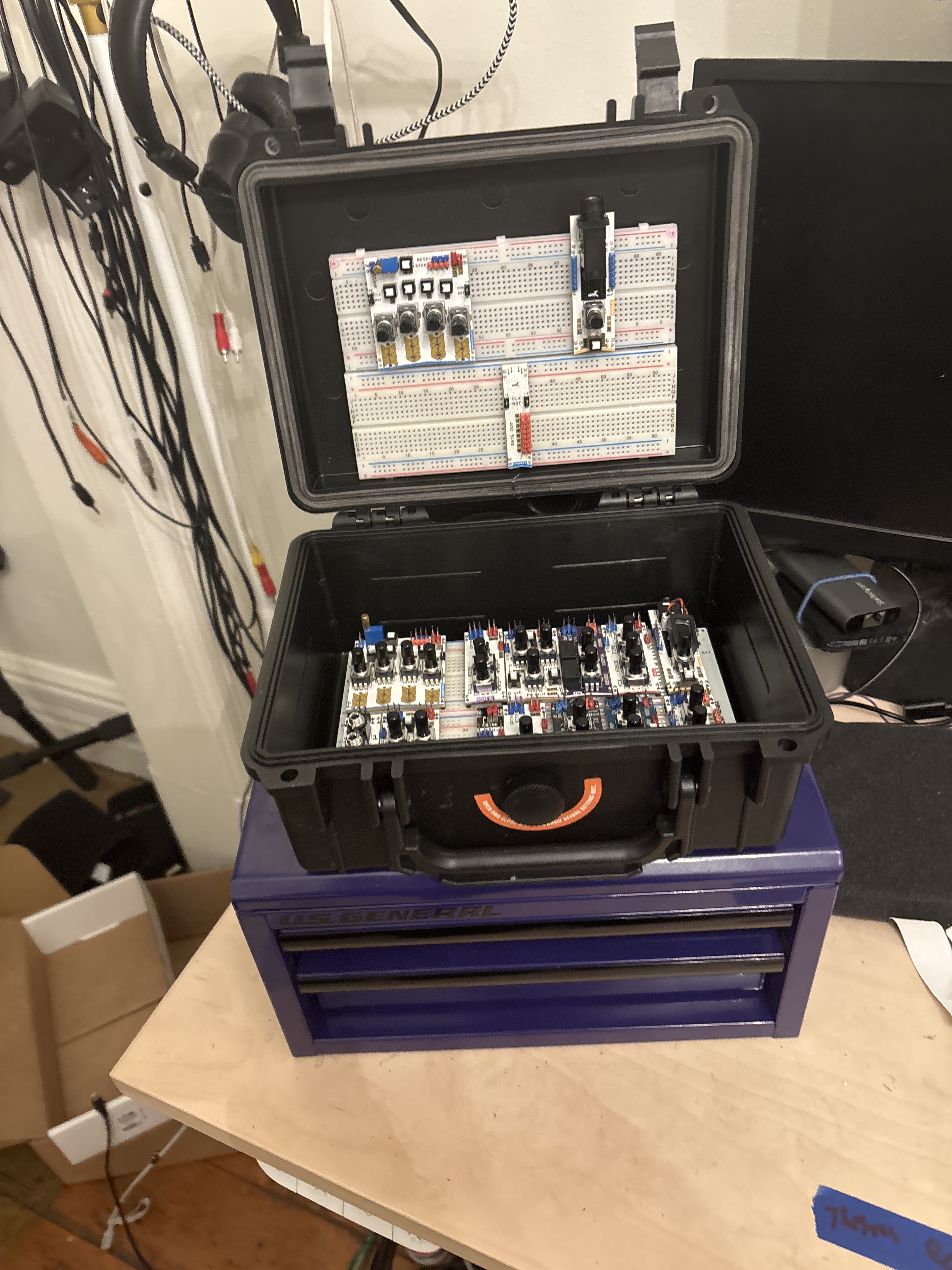
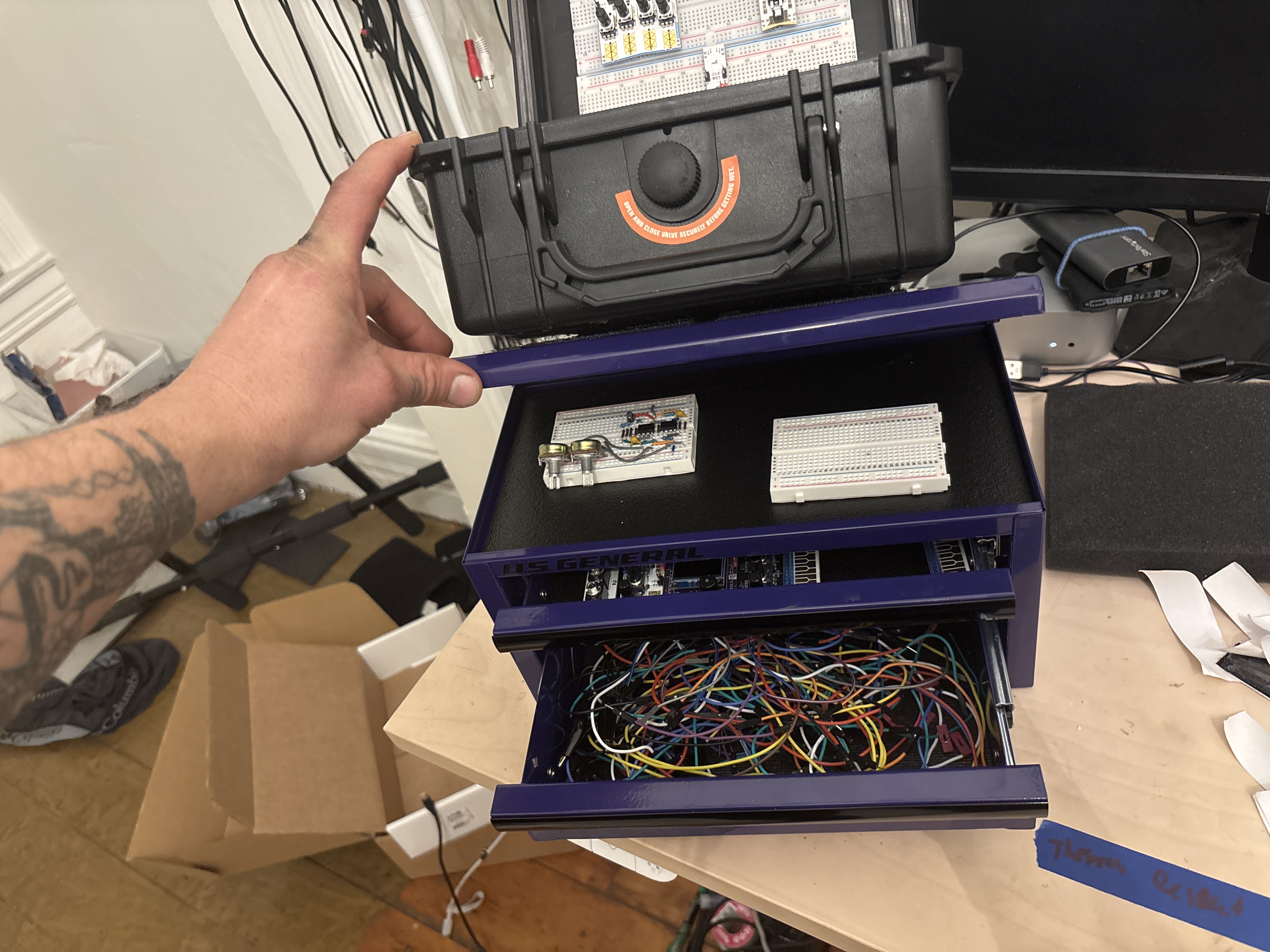
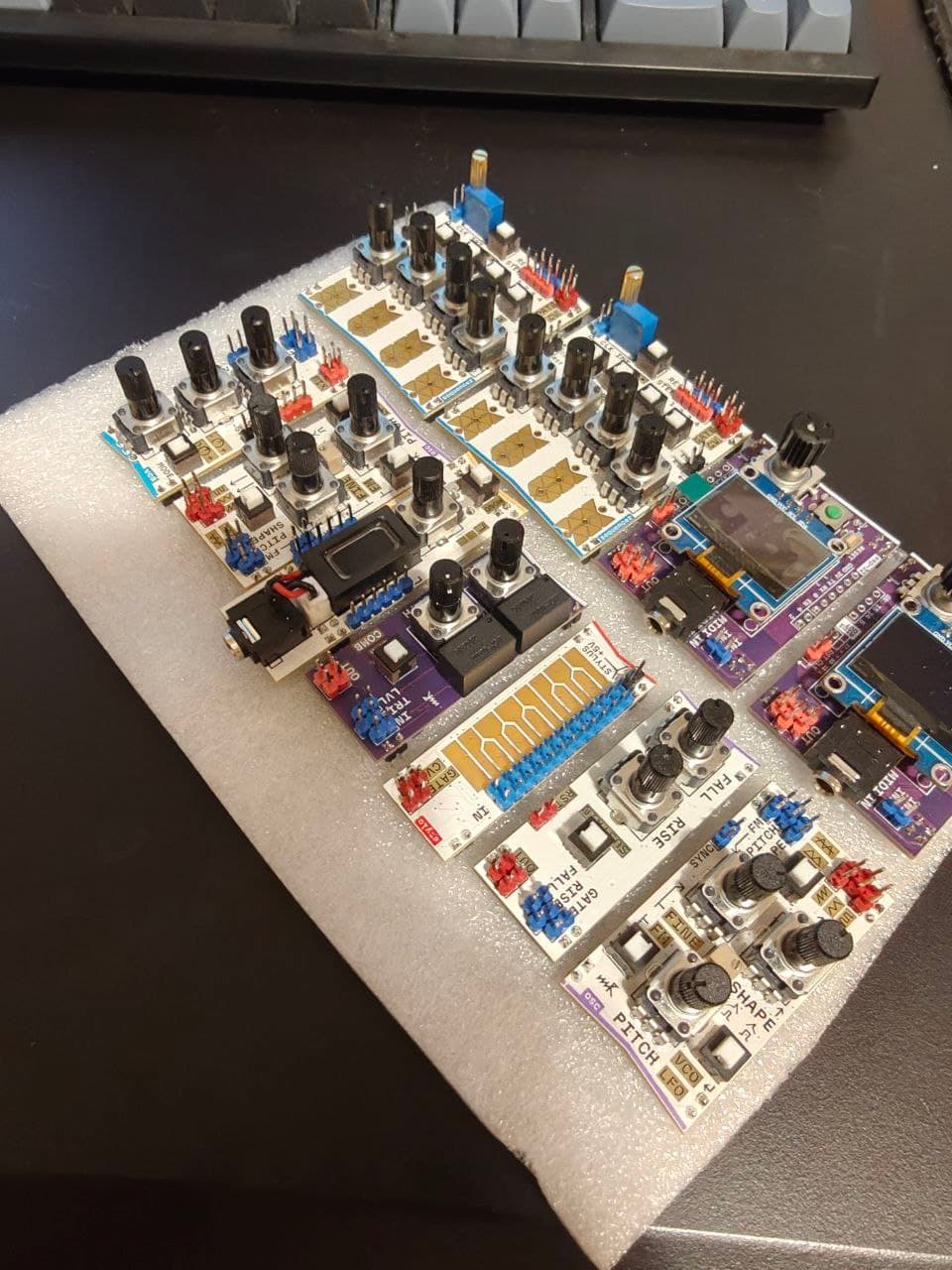
At least in a full kit variant, there is much more modules in the kit than would be actually placed on the breadboards. And it is important to store them in a way that they would not be damaged, especially pins.
So far, the best improvised way I could find is to use foam from the rack chassis that comes with the kit, so it can be used almost instantly as you get your kit.
Modules are placed easly, pins get protected, and modules are flat, reachable and visible.
Does not sound like a big discovery, but it took me two days to understand that I can use it, and it was two days that could bend the pins while storing modules randomly.
Therefore I think you’d better not throw away this foam until you have better way to store your modules.
If you have better solutions, would be nice to know.
I was thinking about 3d printed solution, but not sure yet about how exactly I want it to look like.
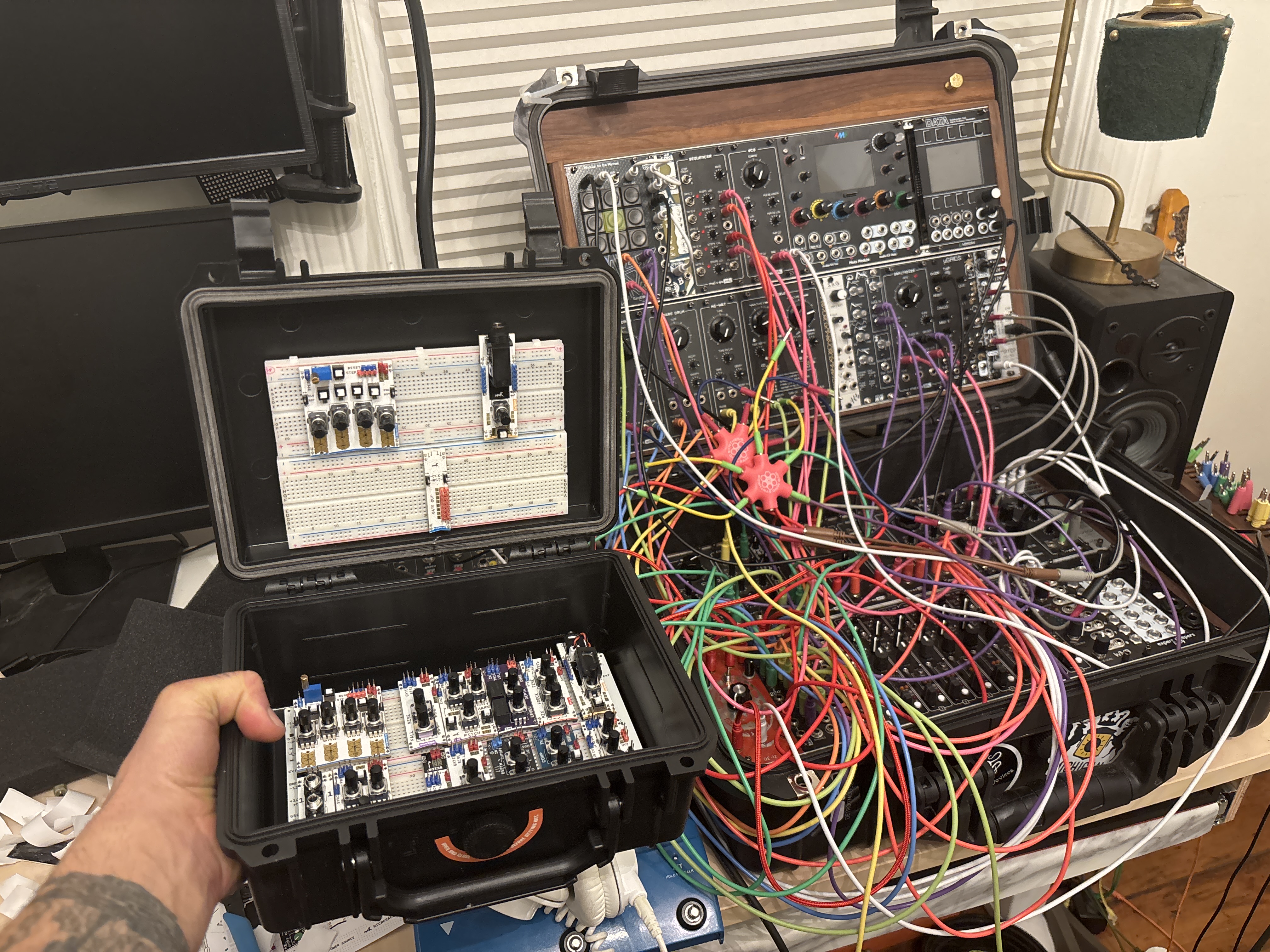
I’m purchasing a knock-off pelican case for this exact use. ESD Foam inserts and their original faraday bags. I have a similar solution in place for my microcontrollers and they work.
One is a long term storage, when you really can put them into antistatic bags and lock in a protected box.
Second one is more kind of palette, when you need easy and fast access to a pool of modules, identify them at a first glance, to swap modules and rearrange them on the breadboards, without much overhead.
After a couple of days playing with microrack I think that every new microrack owner would most probably be doing a lot of “pallete” style usage first, rearranging modules every 5 minutes and only later would settle up for something specific, and packing modules to antistatic bags would start making sense.
I hope that some kind of storage can provide both somehow.
I should mention like I did in the video description that I used a different breadboard that the one delivered with my modules (it was too broad, probably can be shaved down to fit)
 haven’t found a good method at all for these yet